
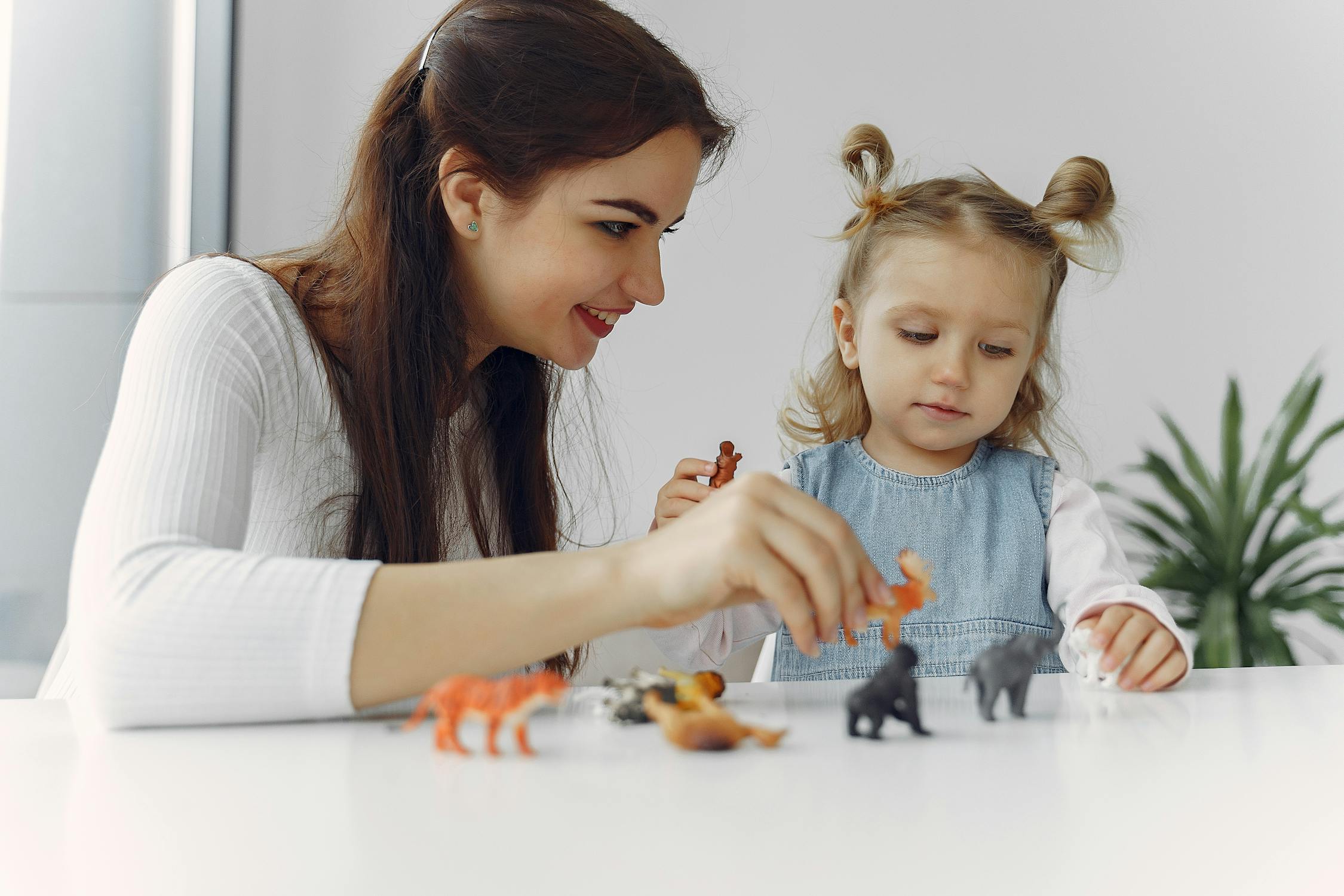
Maths is crucial to a child’s development because it allows them to make sense of the world. Between the ages of one and five, children begin to explore patterns and forms, compare sizes, and count objects. When it comes to problem-solving and presenting their results, kids employ several approaches. Dramatic play, literacy play, outdoor activity, and scientific play are examples of maths play. As a result, Maths is essential in life, and we apply maths concepts and the ability for solving problems regularly without even realising it.
As we all know, arithmetic is the discipline of mathematics that deals with the study of numbers and the different operations like addition, multiplication, etc., that may be performed on them. Mathematical principles govern everything around us, and without a thorough understanding of them, one may face substantial obstacles in life. For example, Mathematics is a vital part of banking and financial matters. For preserving the money in the best possible way, it is vital to be accurate in the accounts. For balancing the budget, mathematics enables individuals to manage their money. It aids in the calculation of bills and financial commitments such as taxes, insurance, and loans.
By giving opportunities for children to learn and develop new abilities, parents and teachers play a significant role in influencing and modelling behaviour for children. Adults must allow children to conduct their play and encourage them by enriching or extending their play. The following are some reasons that every kid should learn arithmetic in primary school.
Improves Problem Solving Abilities
Maths is used to help students develop critical thinking and problem-solving skills. When given a problem or a situation, elementary children should recognise the appropriate procedures for reaching conclusions and performing computations. Children should move from using real objects and written calculations to mentally performing operations throughout primary school. Primary school students should also recognise the patterns and provide illustrations for mathematical statements.
Helps in Dealing with Numbers
Mathematics entails counting, recognising numbers, and performing elementary addition and subtraction operations at its most fundamental level. Students should be given multiple opportunities to learn these skills in the primary grades. Children should be able to write and recognise numbers, count forward and backwards by memory, and compare numbers and quantities by the end of primary school. Students in primary school should be familiar with numerical facts and relations. They should also know to multiply, divide, subtract and add numbers.
Boosts Self-assurance
It is important to cultivate confidence and fluency in maths study to increase passion and success. The highly capable maths students should be able to exhibit the following abilities:
- They show mathematical thinking and a great understanding of quantitative data in their environment.
- They can sense, visualise and generalise numeric and non-numerical patterns and relationships.
- They have reverse thinking processes and switch methodologies.
- They can work, express, and justify mathematical concepts in imaginative and straightforward ways, both verbally and visually.
To learn more, subscribe to BYJU’S YouTube Channel today!
